

By Emma Singh
Our town doesn’t live in a bubble. High up at 9,300 feet, Crested Butte is seeing environmental and weather changes that touch everything from rivers to wildflower blooms. Here’s a snapshot of what science, data, and local observation tell us is changing — and what that means for how we live.
Reduced Snow, Earlier Melt
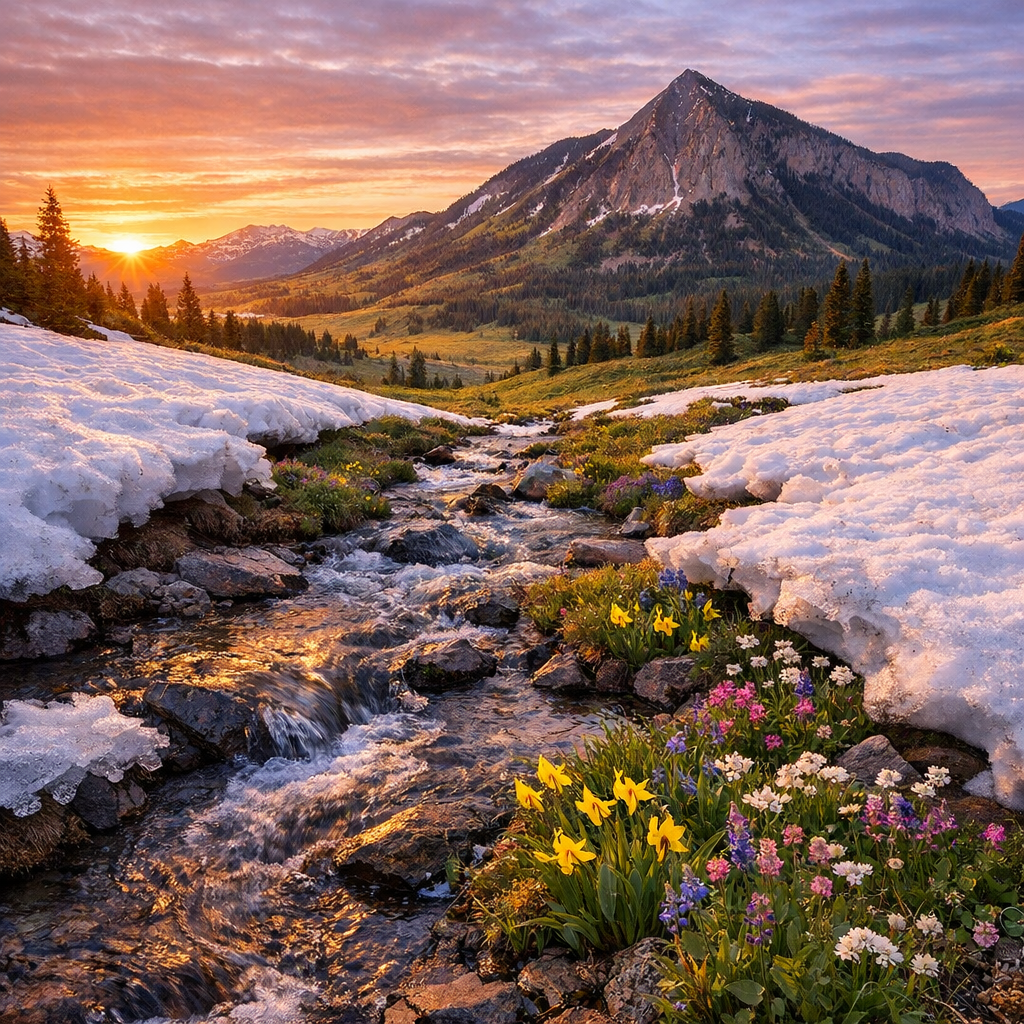
Recent records show Crested Butte’s snow isn’t just lighter—it’s leaving sooner. Snowpack in the Upper Colorado River Basin has dropped to historically low levels. Warmer spring temperatures are speeding up melt, leaving streams and reservoirs with less late-season water. That has knock-on effects for ranchers, gardens, and anyone who values our mountain-fed water supply.
Growing Season Changes & Plant Communities
With warming springs and longer frost-free stretches, plants and trees are shifting uphill. Species more typical of lower elevation zones—woody shrubs and hearty grasses—are becoming more common in alpine areas, while some cold-adapted wildflowers and forbs are struggling. Ecologists warn that, over decades, these shifts could reshape the character of our high-alpine meadows.
Why Treeline Matters
The boundary above which trees don’t grow—the treeline—is moving slowly upward. But it’s constrained by factors like soil, snow duration, and exposure to wind. Even small shifts in temperature and snow retention have outsized effects on what plants can survive—and where.
Drier Summers and Hydrological Stress
Summers here are getting drier, especially in terms of prolonged stretches without rainfall. Studies going back over a century show that precipitation variability during the growing season is increasing in Crested Butte and surrounding high-country sites. Storms still come—often in mid-summer—but they’re less predictable, and their patterns are shifting.
As a result, streamflows during late summer are more fragile. Lakes are warming sooner and ice-off dates are happening earlier. That not only affects fish and aquatic life—it changes when and how people use water for farms, fire control, and outdoor recreation.
Risk of Wildfire and Compound Hazards
Dry spells and warm conditions are contributing to increased wildfire risk in our area. And when wildfire scars occur, heavy summer rains often create a second problem: flash flooding in burned slopes, debris flows, and sediment-laden runoff into our creeks and reservoirs.
What We Can Do Locally
- Track snow and streamflow numbers — even small changes early in the season give clues for water planning.
- Support native plant restoration and protect alpine meadows from trampling and development.
- Use water conserving landscaping, capture rain when it falls, and stay involved with local water policy.
- Prepare for wildfire and flood risk—manage vegetation, maintain defensible areas around homes, and stay alert during summer storms.
The changes we’re seeing around Crested Butte aren’t distant rumors—they’re here now. The more informed we are, the better we can adapt and preserve what makes this place remarkable.